

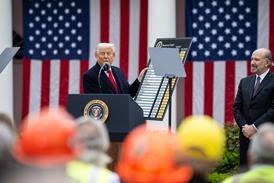

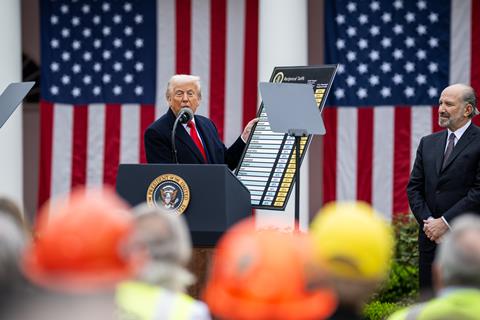
Donald Trump’s sweeping global ‘Liberation Day’ tariffs last April, which upended global trade, have been dramatically struck down by the US Supreme Court.
The court today ruled the US president had exceeded his powers by introducing the controversial package of reciprocal import tariffs under the International Emergency Economic Powers Act last April.
Trump had argued that the US was facing a “national emergency” over its trade deficit ahead of the tariff announcement.
But in a so far rare check on executive power during Trump’s second term in office, six of the court’s nine justices voted in favour of an appeal by US businesses to overturn the policy.
The ruling argued that the tariffs – imposed via an executive order by Trump – were not permitted under the emergency powers of the act, with the president needing congressional authorisation to impose the levies.
The Trump administration has been waiting for a decision on the appeal for more than a month, with the US president warning on his Truth Social platform in January that any decision against the tariffs and a potential payback to affected countries would cost “trillions of dollars” and would be a “complete mess, and almost impossible for our country to pay”.
He added: “If the Supreme Court rules against the United States of America on this National Security bonanza, WE’RE SCREWED!”
The tariffs and the global negotiations which followed ultimately led to the signing of free trade deals with a number of countries – including the UK, which signed its ‘Economic Prosperity Deal’ with the US last May.
That agreement included tariff-free access for 13,000 tonnes of hormone-free US beef in the UK market, with reciprocal access to UK producers. However, an agreement to also allow the US a zero-tariff quota of 1.4 billion litres for ethanol exports to the UK has been described as disastrous for Britain’s bioethanol sector and the farmers which supplied it with crops.
And despite signing the deal, the UK has still faced a 10% baseline tariff on the majority of exports to the US, including most food and drink products.
Read more: Will UK producers benefit from trade deal with the US?
Overturning the tariff policy “could generate uncertainty regarding various trade agreements”, the court ruling acknowledged, citing comments from Trump-appointed conservative justice Brett Kavanaugh – who voted against the court decision.
“The United States may be required to refund billions of dollars to importers who paid the IEEPA tariffs, even though some importers may have already passed on costs to consumers or others,” justice Kavanaugh added in his argument.
However, chief justice John Roberts said continuing with the policy “would replace the long-standing executive-legislative collaboration over trade policy with unchecked presidential policymaking”.
Trump is yet to comment on the court decision.
A UK government spokesperson said the court decision was “a matter for the US to determine but we will continue to support UK businesses as further details are announced”.
“The UK enjoys the lowest reciprocal tariffs globally, and under any scenario we expect our privileged trading position with the US to continue,” they added.
“We will work with the administration to understand how the ruling will affect tariffs for the UK and the rest of the world.”


No comments yet