


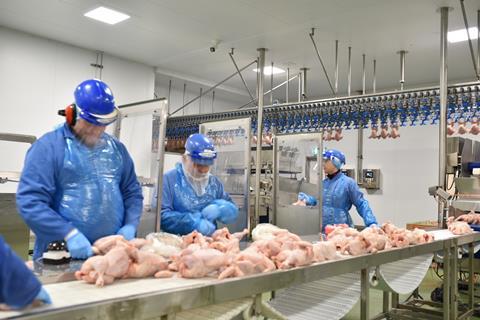
Poultry giant Avara Foods has described 2025 as a year of “two halves”, however a strong end to the financial year saw it begin to “reap the benefits” of an ambitious turnaround programme.
Following a 2024 marked by factory closures, a reshaped supply chain and a business restructure, the processor said it was now “back to a sustainable business model” in its strategic report for the year ending 31 May 2025.
Restructuring costs continued into the year but halved compared with 2024, decreasing from £11.6m to £5.3m. At the same time, operating losses improved from £54.8m to £33.2m.
The company also increased its gross profit margin from 4.8% to 5.6% and saw EBITDA recover from –£14m to –£1.9m. This was achieved despite turnover largely remaining flat at £1.3bn.
Avara had “gone through a time of change but has now emerged in better shape, leaner and more streamlined, with a stable operational and financial platform”, the business said in its report, published on Companies House.
“The costs associated with our business restructuring continued to impact on the first half of the financial year, but we turned a corner mid-year and started to reap the benefits of the difficult decisions we made,” added CEO Chris Hall.
“Our financial improvement is of course pleasing, but we are also delivering against a number of other important commitments,” Hall said.
“Reducing carbon emissions ahead of our approved science-based targets, the successful delivery of lower stocking densities and the launch of new colleague engagement initiatives including our regional colleague councils, are just some of the ways we have delivered against our promise to be a responsible business.”
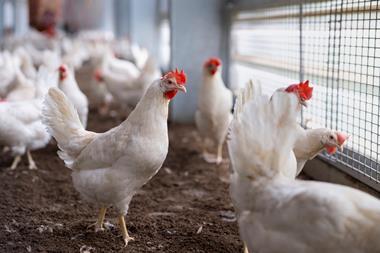
Last year saw the business complete a move to lower stocking densities across its supply chain, with all farms now operating at 30kg per square metre, down from the Red Tractor standard of 38kg.
The move, made in March 2025, enabled Avara to concentrate its supply and product mix around its core strategic retail and foodservice partners, supporting their growth, it said.
Avara added the “UK market remains healthy, underpinned by population growth and consumer trends for a natural source of healthy affordable protein with local provenance”.
Looking ahead to the current financial period, Avara said 2026 had begun with fresh challenges, pointing to significant cost increases driven by national living wage and National Insurance changes. It is also facing a legal challenge regarding river runoff.
It additionally raised other legislative challenges regarding planning, with delays to reform of the system making it challenging to meet the growth in demand for poultry through homegrown production, it said.
However, Hall stressed the supplier now had “strong foundations for a return to sustainable margins and have built on this in the current financial year”.
“Demand for our products is strong, we have improved our financial position, and our streamlined operations are delivering for our customers,” he added.




No comments yet