





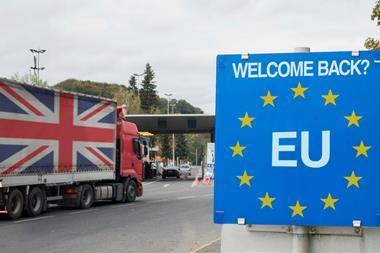
The government has rejected food sector calls for a phased transition to EU rules as part of the ‘reset’ with the bloc, insisting its new sanitary and phytosanitary (SPS) deal will come into force in mid-2027 as planned.
A major Commons Efra Committee paper published in February called for “an implementation period of at least 24 months for sectors to make necessary adjustments” to the SPS deal. However, the government disregarded this in its response, published today.
Such a delay to dynamic alignment with EU rules was necessary to ensure the success of the deal – which effectively takes the UK food and drink sector back into the EU single market – the committee argued, while criticising the government’s lack of engagement with industry on the matter.
Its warnings that realignment with the EU could pose significant challenges for the food sector have since been shared by the likes of the BRC and FDF, whose CEO Karen Betts cautioned last month that “the change is even greater” than when we left the EU”.
But the government’s response offered little reassurance, saying only that it has been “listening to businesses”, and adding that “we know that some require longer to adjust to the new arrangements and will continue to work with them to ensure a smooth transition”.
Read more: Is food & drink ready for the EU reset?
It added: “As negotiations progress, we will continue to work closely with affected sectors, port health authorities and local authorities to plan for any changes.”
More detailed guidance would be published in May, as negotiations with the EU on the detail of the deal came to a close, it said.
The response was met with “disappointment” by Efra Committee chair Alistair Carmichael MP, who said alignment without adequate time “could be very disruptive”.
Cold Chain Federation CEO Phil Pluck told The Grocer that the rejection of Efra’s calls was a “recipe for more confusion”, and questioned the government’s claim it was engaging with industry in any real depth.
“The government says it is consulting, but the simple answer is that they are not. We are still to hear a response and offer of engagement on the SPS deal”, he noted.
Elsewhere in the government’s response, it did, however, agree with the committee’s recommendation that ministers should seek a carve-out from dynamic alignment on regulations regarding animal welfare, “and avoid UK industry being undercut by products from countries with lower standards”.
It also confirmed that regulations impacting precision breeding “are up for negotiation with the EU, but that the UK has communicated that this is a matter where it should continue to have its ‘own rules’.”
UK’s lab-grown meat boom set to be quashed by EU talks
Likewise, it said the UK would “contribute to decision-making” for the continued use of plant protection products currently banned in the EU. Farmers have warned failing to achieve a carve out could cost the sector more than £800m in the first year of a deal.
Ministers also kept alive the prospect of a deal carve out on animal welfare, pledging to “continue to champion the importance of high standards of animal welfare and promote best practice around the world”.
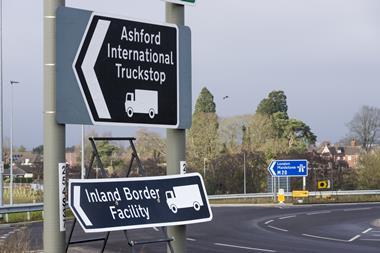
And amid mounting concerns over the UK’s porous borders and the flow of illegal and unsafe foods into the UK, illustrated again this week through new figures released by Ashford Port Health Authority, the government said it had has “established a new Illegal Imports Improvement project”.
Its first output was an “action plan” with input from the Food Standards Agency, Home Office, Border Force and others. “This will consider demand, alongside other areas, and prioritise resource where evidence suggests the greatest impact will be delivered,” the government said.
But “with headwinds already howling” from a host of geopolitical challenges, Carmichael urged more action and clarity by government on the deal, warning “the sector needs all the help it can get”.



No comments yet