






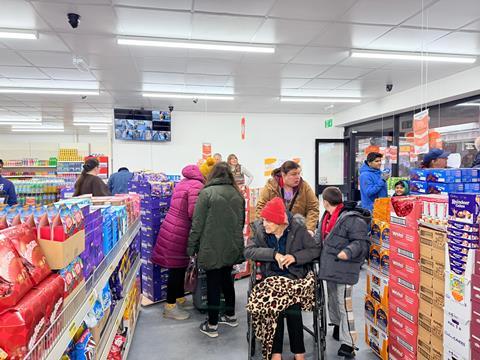
A supermarket built around selling surplus food, including products past their best before dates, says it has received nearly 100 enquiries after advertising for potential franchise partners.
Bargain Grocery Outlet (BGO), which opened its first supermarket two years ago in Stevenage, has plans for national expansion, describing the business model as a “win-win” in tackling food waste and helping customers tackle the cost of living crisis.
It sells surplus stock, discontinued lines, cancelled orders, and products subject to packaging changes sourced from manufacturers, wholesalers and distributors.
The Stevenage store stocks around 3,000 products, selling at up to 70% off RRP on some products. It sells surplus alongside other everyday products at the store.
Founder Dee Thaya, who has 35 years’ experience in retail and wholesale, said he was confident there was significant public demand for a rollout on a much wider scale.
He said: “Traditional clearance warehouses sell surplus. We have built a supermarket around surplus, and our ambition is to build around the country through our network of operators.
“We are surplus-first rather than surplus-only, so alongside the exceptional bargains customers discover, we also want them to be able to buy the everyday products they need.
“Customers can buy one item, several items or, where appropriate, a whole case within a proper retail environment. We believe there is currently nothing quite like it at national scale in the UK retail market.”
The company says it has received Independent Operator interest from Brighton to Glasgow and Norwich to Nantwich, with several prospective operators interested in multiple outlets and signing letters of intent and requesting particular territories.
Thaya said: “We see BGO as a genuine win-win-win model.
“Customers can save money at a time when household budgets are under pressure. Manufacturers, wholesalers and distributors gain a credible and responsible route to market for surplus stock and can recover value from products that might otherwise unnecessarily become waste.”








No comments yet