




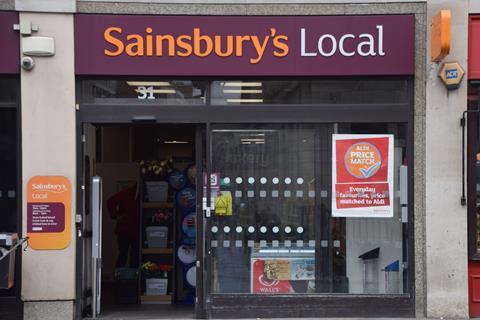
Anti-pesticide campaigners have targeted Sainsbury’s, calling on the retailer to cut controversial herbicide paraquat from its global supply chain.
Pesticide Action Network UK launched a social media campaign against the supermarket yesterday (17 June), asserting the chemical banned in the UK since 2007 was “responsible for poisoning thousands of farmworkers around the world”.
In failing to remove paraquat from its global supply chain, PAN UK said Sainsbury’s was the largest supermarket still permitting its use and accused it of lagging behind its rivals.
The organisation confirmed to The Grocer that Waitrose and M&S had already phased paraquat out of their systems, with Asda and Co-op “on the way” and Tesco having also committed to a ban.
“We banned paraquat nearly 20 years ago to protect UK farmers and wildlife,” said Pan UK head of policy and campaigns Sarah Compson. “And yet we continue to export the horrendous impacts onto farmers and communities around the world.
“Farmers in the EU, UK and beyond have thrived for almost two decades without paraquat,” she added. “It’s high time that Sainsbury’s put people and planet first by banning this toxic chemical.”
NGO Parkinson’s UK has been one of the biggest voices to back the campaign since its launch – Parkinson’s disease is one of the most high-profile chronic health conditions linked with repeated paraquat exposure.
“Over 70 countries around the world have banned paraquat,” the NGO said in a LinkedIn post. “It’s time for Sainsbury’s to put people and the planet first by ending its use”.
Responding to the campaign, a Sainsbury’s spokesperson told The Grocer it was working with its suppliers to “move away from the use of paraquat”.
“As a responsible retailer, we are committed to protecting the environment and supporting sustainable farming,” Sainsbury’s said. “We continue to work with our suppliers and growers, supporting them to assess and adopt safe and effective alternative approaches.”
They added: “There are a very small number of exceptional cases in which it is used in our supply chain, and these instances are tightly controlled, with time-limited approval.”










No comments yet