



Fresh produce businesses are facing a surge in import costs and red tape that could cost the sector more than £300m a year under new post-EU reset trading conditions.
The government has claimed its new sanitary and phytosanitary (SPS) deal will slash costs and the need for time-consuming export paperwork, helping boost the economy by as much as £5.1bn per year.
But by effectively taking the UK back into the EU single market for food and drink, the agreement – due to be signed off at the next EU/UK summit in late June or early July – meant importers bringing in Fruit & veg from outside the EU would also need to adhere to EU rules, warned Fresh Produce Consortium chief executive Nigel Jenney.
This meant the businesses that imported 50% of the UK’s fresh produce demand would have to face the same burdensome border bureaucracy the SPS deal aimed to do away with for UK food exporters, he argued – raising fresh doubts around government claims the deal will help reduce the cost of food.
Speaking after Defra today published fresh guidance on what companies should do to prepare for the deal and its expected implementation in the middle of next year, Jenney told The Grocer that “most fresh produce imports from the rest of the world don’t have border inspections when they arrive in the UK”.
Long running easements that started in 2021 had allowed fresh produce imports, both from the EU and third countries, to continue entering the UK with minimal checks while a new post-Brexit border regime was phased in.
“So there was no ‘saving’ of any money [or a reduction in border red tape] for these products,” Jenney pointed out.
“The UK government, with its own scientists, evaluated its own biosecurity risk and the sources of these products,” he added. “Most of these products no longer have any inspections as you arrive in the UK because it’s not considered necessary, and the ones that do often have an inspection level of around 5% of total consignments every year.”
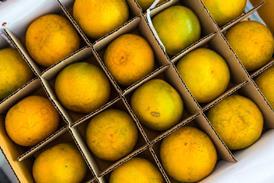
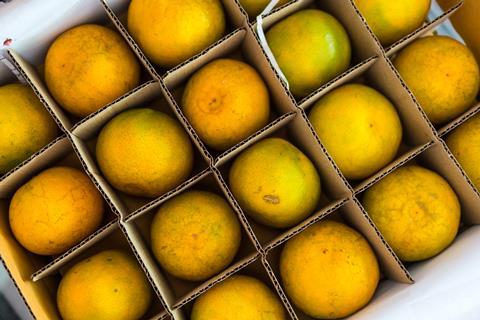
But when the UK transitions to EU standards, “many of those products [from outside the EU] which are currently not subject to any checks – such as citrus, mangoes and cucumbers – will potentially move to 100% levels of inspection”, Jenney said.
And alongside a ramping up of inspections, importers would now also need to fulfil a slew of extra phytosanitary certification requirements, expanded pre-notification obligations, additional reporting and compliance systems, plus potential new post-import checks and operational delays.
‘Turning our back’ on the rest of the world
Importers bring into the UK “at least” 120,000 consignments of fruit and veg from outside the EU each year, amounting to about four million tonnes of produce, he added, but the proposals risked seeing the UK “turn our back on the rest of the world”.
The sector would soon have to incur “huge costs when trading with the rest of the world”, he added, that would filter down to “huge costs for customers”, even though the goods “would never leave the UK market” and would never be able to enter the EU market due to them not having the correct paperwork.
Jenney said he had discussed this unintended consequence of the EU reset with government officials, only for his concerns to fall on deaf ears, after “they chose to ignore our advice”. The Grocer understands the government is fully aware of these issues, but remains committed to the wider goals of the SPS deal.
“The government continues to present this agreement as a solution that will reduce barriers and simplify trade. However, the detail emerging from its own guidance tells a very different story,” he added.
“Serious questions also remain about the practical reality, infrastructure requirements, inspection capacity and cost implications of applying expanded controls to millions of tonnes of highly perishable fresh produce when the current system is already delivering exceptionally high compliance outcomes,” Jenney said.
“Let’s say a Moroccan soft fruit business is exporting to the UK via Spain. They can have their SPS goods checked there, but nobody is giving any clarity over how that vehicle can move from that point – when it hasn’t cleared EU customs – to the UK border,” he suggested.
‘Logistical stupidity’
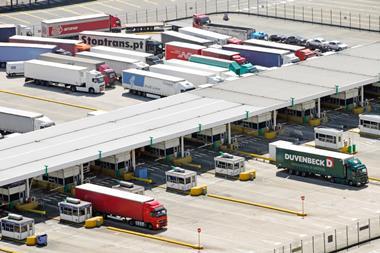
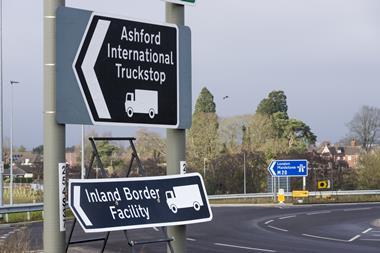
Many of these ‘rest of the world’ products would also arrive at major ports on the east coast of England in container ships, he argued, where there was “nowhere near the amount of control points” required. It would be “logistical stupidity” to then drive 400 miles to border control points in the south east of England.
“There are going to be thousands of consignments coming into very, very few points of arrival in the UK. And at the moment, I don’t see that the government in particular has the ability or infrastructure to manage that volume of products.”
The government’s guidance and its desire to seal the SPS deal, regardless of Jenney’s concerns, revealed “an increasingly politically driven and EU-focused approach to trade policy that risks imposing substantial new costs, complexity and border friction across the UK food supply chain”.
The FPC acknowledged the SPS deal “could provide operational benefits for certain UK importers and exporters and help reduce friction on EU trade flows”.
However, Jenney warned those benefits were “being achieved by knowingly transferring new cost and complexity onto highly efficient global supply chains that currently underpin UK food security”.
“What we are seeing is a selective and politically driven ‘pick and mix’ approach to trade policy – highlighting the benefits of EU alignment while failing to acknowledge the very significant burdens now being imposed elsewhere across the supply chain,” he argued.
“For the fresh produce sector, this does not remove friction or cost. It simply relocates it.”
Commenting after the government updated its guidance this week, Defra minister Baroness (Sue) Hayman said: “We are working hand-in-hand with food and farming businesses up and down the country to make the most of this opportunity and want every British producer – whether they currently trade with the EU or not – to be ready to seize the benefits this deal will unlock.”







No comments yet