



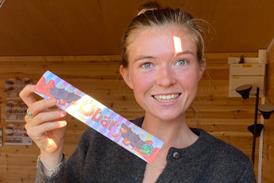


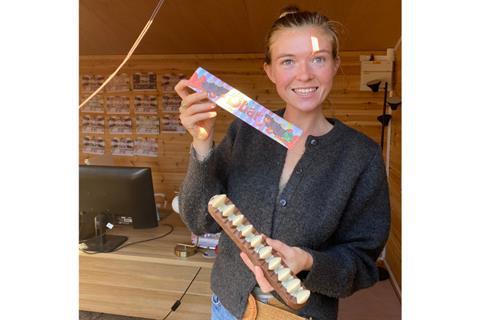
A vegan chocolate startup being sued by Mondelez in a trademark dispute has said it will “not be bullied” by the chocolate giant.
Catherine’s Originals, founded by Catherine Dodd and Jamie Miller in 2021, has been accused by Mondelez of copying Toblerone’s distinctive shape.
The owner of Cadbury and Oreo filed legal proceedings against Catherine’s Originals at the High Court in London this month, accusing the challenger brand of “passing off” and trademark infringement with its O’bar range, The Guardian reported.
The O’bar range features chunky sharing bars made up of rounded segments. The 200g bars, which have an rsp from £9.20, come in several flavours, including milk, white, mint and coconut.
Defending the design, Dodd said the bars were “clearly and deliberately O-shaped”.
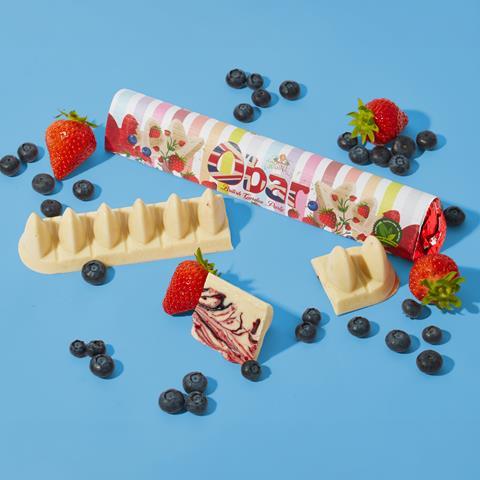
“Its rounded, domed form is inspired by the ‘O’ in Catherine’s Originals and by the smooth, curved edges that run through all of our products,” she told The Grocer. “It is not a triangle, and we do not believe there is any confusion between the O’bar and Toblerone.”
The 24-year-old said she “strongly” disagreed with Mondelez’s allegations and accused the chocolate giant of “attempting to intimidate a small independent business into folding”.
“We will stand firm in what we know to be true: we have built a distinctive product and brand, with our own identity,” she said “I will not be bullied. Catherine’s Originals will not be bullied.”
Dodd explained she had launched Catherine’s Originals in a bid to create vegan chocolate that felt “exciting, generous and full of personality”, initially selling products at Brighton Christmas Market from her parents’ kitchen.
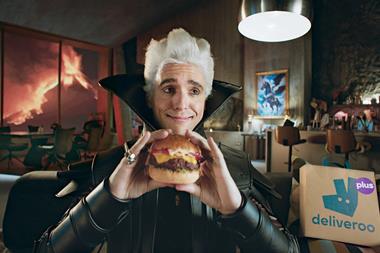
The business received a major boost in 2024 when former Deliveroo drivers Dodd and Miller secured a £25,000 investment through Deliveroo’s Big Pitch competition. The funding allowed Catherine’s Originals to move production into a dedicated factory in Arundel, West Sussex, and purchase production machinery.
Alongside its O’bar range, the brand’s lineup includes Bendy Bars, Wonky Buttons, selection boxes and Advent calendars. It sells around 80% of its stock through its DTC webstore, while the remainder is sold via independent retailers and local markets.
Dodd added: “I’m proud of our team, our products and the business we’ve built, and we will keep making chocolate that chocolate lovers get excited about.”
Mondelez response
Approached by The Grocer, a Mondelez spokesperson said: “The iconic Toblerone shape is one of the most recognised and distinctive product designs in the UK and across the world, and has been a hallmark of the brand since 1929.
“We have a responsibility to protect our trademarks and intellectual property, which we take seriously. We have attempted to resolve this matter constructively and directly with Catherine’s Originals over several months but unfortunately have been unable to reach an agreement. We cannot comment further on ongoing legal matters.”
Michael Conway, an intellectual property lawyer at London-based firm Birketts, said he was not surprised by Mondelez’s decision to pursue legal action.
“The Toblerone shape is one of the most famous and closely protected shape trade marks on the market, and brand owners are generally expected to enforce rights they consider may be at risk,” he said. “Whether the claim ultimately succeeds is a different question.”
However, shape trade marks were “often interpreted relatively narrowly,” Conway said, adding the court would “need to assess the extent to which the products’ shapes are actually similar”.
He added: “However, where a mark enjoys the level of reputation associated with Toblerone, consumers do not necessarily need to be confused into believing the products come from the same source.
“If the shape used by another trader is found to be sufficiently similar to evoke the famous Toblerone mark and create a ‘link’ in the mind of the average consumer, that may be enough to support an infringement claim.”




No comments yet