
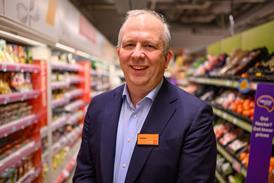


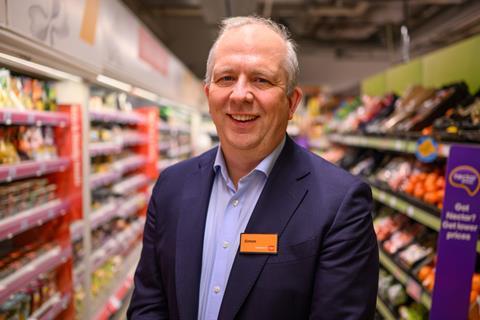
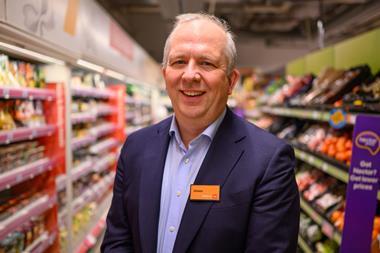
Sainsbury’s CEO Simon Roberts has warned there is “no doubt there will be pressure on food prices” as he urged the UK government to extend energy support to the food sector.
Speaking today as the supermarket giant published its full-year results for the year to 28 February, Roberts said “the single biggest thing the government could do to help support keeping food prices down is to make sure that energy costs to the industry are not rising faster”.
“In the food industry, energy costs are significant for us,” he said. “We do everything we can to mitigate those through hedging where we can, but I think that would be a key area where government could support the sector to make sure we keep down the impacts of inflation and mitigate as far as possible.”
Sainsbury’s warned the “very uncertain” situation in the Middle East may impact profits. It guided 2027’s underlying operating profit could lie anywhere between £975m and £1.08bn.
Roberts said: “We don’t know the duration of the conflict at this point in time, and that’s the reason we’ve set a range this year to give us the flexibility to make sure we can make balanced choices for customers, for colleagues, working with our suppliers, and in what we deliver for our shareholders.”
He disclosed that two weeks ago the retailer had a “good discussion” at the most senior levels of government on considerations to mitigate food price inflation, including addressing the sector’s energy costs.
“High intensity industries have had support already. We look and ask for that to include food and food manufacturing parts of industry,” he urged.
Keeping inflation at bay
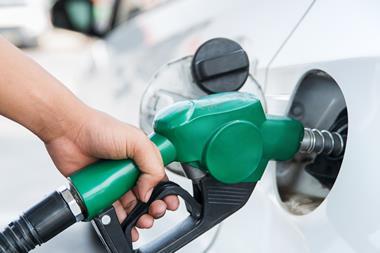
On fuel, Roberts said that over Easter, Sainsbury’s saw “more demand for fuel” and “came under a bit of pressure in some of our forecourts”. He said the situation now was “stable”, adding there was “good stock on fuel across all our forecourts”.
Roberts remained positive when questioned over how the conflict had affected availability, saying Sainsbury’s was “seeing some of the best availability we’ve seen in a long while”.
He said the business would continue to work closely with suppliers to mitigate the impact of inflation.
Roberts also said Sainsbury’s was “not seeing issues with meaningful changes in customer behaviour”, despite warning that shoppers were “conscious of cost of living pressures”.
“We are absolutely committed to making sure everyone gets the best possible value every time they shop with us, our supply chain is resilient, and after recent years, our team is experienced at navigating difficult headwinds while staying focused on what really matters most to our customers.”
Over the past five years, Sainsbury’s has invested £1.3bn in lowering prices. The supermarket said it “maintained a strong value position against all key competitors over the year”.
It said customers continued trade-up to its premium own-label Taste the Difference range despite the pressures. Sales of the range grew ahead of its £2bn target, with fresh food sales up 16%. Some 69% of customers shopped both Aldi Price Match and Taste the Difference in the same trolley over the period.
“We will invest again this year to make sure we keep inflation at bay, and we are absolutely committed to make sure that we give customers the best value,” Roberts said.
Sainsbury’s grocery sales were up by 5.2% in the 52 weeks to 28 February 2026, while sales excluding fuel climbed 4.9% to £25.9bn.
Underlying operating profit came in at £1bn as previously guided, down 1.1% on the year before. Despite that, pre-tax profit rose 1.3% to £718m and profit after tax shot up 55% to £393m as Sainsbury’s completed the disposal of its banking arm.



No comments yet