

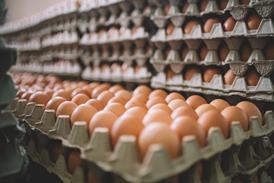



The number of salmonella cases linked to imported eggs has risen to 549, according to the UK Health Security Agency.
It means the total number of cases detected as part of organisation’s ongoing investigation into three distinct outbreaks of salmonella enteritidis has increased 3.9% since the last update on 3 September.
Broken down by cluster, 322 cases and one death have now been linked with t5.9411; 41 cases and one death to t5.9765; and 186 cases and no deaths to t0.24068.
According to the UKHSA, the risk to the public from salmonella remains low, but it has continued to associate cases with food outlets including small cafés, restaurants and takeaway businesses.
“Our investigation to date indicates a link to imported eggs. However, this investigation remains ongoing,” said UKHSA lead epidemiologist Hannah Charles. “We will continue to follow up cases and investigate any further common sources if they come to light.
“It is important to emphasise that the overall risk to the public remains low,” she added. “In England, all salmonella samples from patients seen in hospitals or primary care are routinely analysed using whole genome sequencing, helping us identify and investigate potential outbreaks quickly.”
Professor Ian Young, chief scientific advisor for the Food Standards Agency, said eggs that were “thoroughly cooked and handled hygienically” should not present a food safety risk.
However, he reiterated previous advice by saying that infants, young children, pregnant people and old people should only eat raw or lightly cooked eggs if they bore the British Lion mark or were produced under the Laid in Britain scheme.
Young said there was no evidence that UK-produced eggs had been affected.
“If you’re eating out or buying food that contains eggs, you may not know if these carry the British Lion mark or are Laid in Britain assured,” Young said. “If this is the case, when eating out the safest approach for vulnerable people is to ensure they’re thoroughly cooked and to avoid dishes containing raw or lightly cooked egg.
Substandard
As reported by The Grocer at the end of August, the outbreak has reignited long-standing concerns over imported eggs which often do not meet the standards of those produced in the UK.
For instance, under the voluntary British Lion scheme – which covers well over 90% of all eggs produced in the UK – laying hens must be vaccinated against salmonella.
But with government legislation failing to keep pace with industry, imports must only meet the UK’s minimum standard requirements. Further, of the near two billion eggs imported into the UK, the FSA said as little as 15% may undergo identity and physical checks on arrival.
“UK egg farmers invest heavily in food safety, animal health and traceability, and consumers should have confidence that the same high standards apply regardless of origin,” Noble Foods said.




No comments yet