


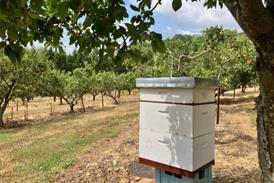
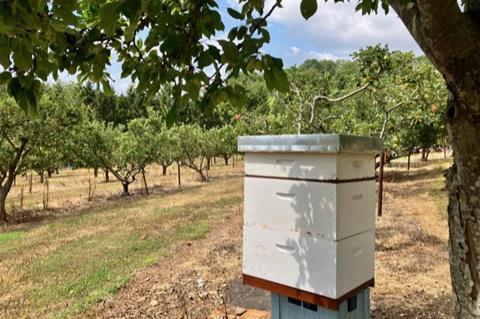
The UK is on track to enjoy a bumper honey yield thanks to the prolonged hot and dry weather, though not all producers are reaping the benefits, according to commercial beekeepers.
Many of the country’s 500 producers have profited from the earlier than usual flowering of summer forage – but this premature flowering could lead to an early finish, which raises concerns that many beekeepers will struggle to feed the UK’s 75,000 colonies come winter.
Additionally, other beekeepers have seen summer crops entirely wiped out due to the drought.
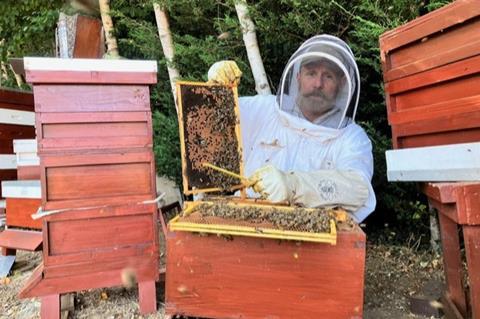
Laurence Edwards, founder and owner of Wales-based Black Mountain Honey, told The Grocer that the honey crop was “probably the best we’ve ever had” but ”the honey’s coming off now, and there’s still a good chunk of summer to go, so this is the dangerous period”.
He emphasised that with a thousand colonies heading through winter this was “the tricky stretch” so the focus was on making sure they “come into spring healthy”.
Other producers have had worse yields, such as James Hamill, founder and director of London and Surrey-based Hive Honey Company, said that his summer crop “has just been non-existent”.
More concerningly, he has started to notice a “big drop” in his honeybee colony populations, which are spread across about 120 hives.
“Normally there’s a high population, roughly maybe 60,000 to 61,000 bees per colony, but it’s been dwindling down to about 51,000 per colony,” Hamill said. He added that much of his time and labour was now being spent on keeping his bees alive, as well as dipping into his honey stocks to feed them.
He warned that it was vital for beekeepers to have large populations going into the winter, because without this the population was on a “razor’s edge”.
Hamill added that as honey bees were vital for cross-pollination without them, “it’s not just going to affect your food crops; it’s going to affect the whole ecosystem because there’s not going to be enough seed”.
He said: “People don’t understand just how much it tips the balance.”
Industry body Bee Farmers Association said it remained to be seen if the prolonged heat and drought would have a negative effect come spring.
However, it noted that summer flowering crops such as borage, which rely on honeybee pollination, had been “significantly affected” and that these shifts were likely to have a major impact.
The association called for more support such as inclusion in government schemes like the Farming Equipment and Technology Fund to allow professional bee farmers to access funding in the same way farmers in other sectors can, as at the moment it “receives no direct financial support from the UK government”.
Additionally, it urged more consumer and retailer support for British honey.
This was echoed by Sam Barber, manager at Honeyfields Bee Farm, who noted that while his colonies were “doing very well”, ”cheap, adulterated fake honey” imports were the biggest threat to British producers.
”This devalues authentic, high-quality British honey, which requires immense labour and expense to produce on a commercial scale,” he said. “Meaningful support for the sector needs to come in the form of stricter regulation, testing, and enforcement against fraudulent honey imports to protect genuine UK producers.”


No comments yet