





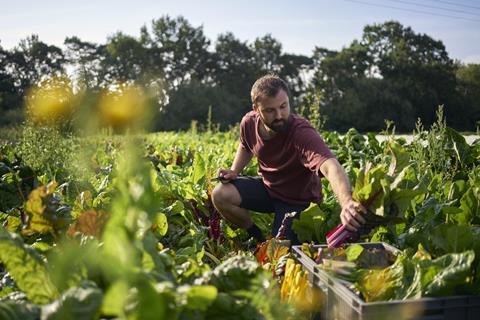
Farmers are facing “growing difficulty” in obtaining cost price increases from certain retail buyers, the NFU has warned, amid soaring production costs, driven by conflict and climate change.
While some supermarket chains operated a “clear and predictable” process, others could leave suppliers “facing long periods of uncertainty”, said the farming union, “contributing to a significant increase in industry frustration”.
Several NFU members had described a well-established ‘playbook’, used consistently across buying teams, the union added, which indicated the issue was “often systemic rather than the result of an individual buyer’s approach”.
And though some retailers were viewed as relatively predictable in their handling of CPI discussions, “others are perceived as less structured, making outcomes and timelines harder to anticipate”, said the NFU, which had raised the concerns directly with the Groceries Code Adjudicator.
The NFU’s latest intervention on the issue comes as the cost of key inputs such as feed, fertiliser and fuel have risen sharply in recent years, with fertiliser prices remaining well above pre-war norms following the supply shock triggered by Russia’s invasion of Ukraine in 2022.
More recently, fresh instability in the Middle East has added further pressure, with AHDB data showing prices for some fertiliser products climbing by as much as 36% since February.
Red diesel prices have also risen significantly, jumping by more than 40% year on year, according to June data from AHDB. Meanwhile, analysis by consultancy The Andersons Centre in May put so-called ‘agflation’, or total farm input Inflation, at 8.4% year on year – running well ahead of CPI inflation (3.3%) and CPI for food (3.5%).
But despite these inflationary challenges, the NFU said many buyers adopted a “head in the sand” approach to CPI requests. Members reported being asked to provide detailed evidence by a specific deadline, “only to hear nothing for weeks or even months afterwards”.
Such behaviour could be in contravention of the GCA’s seven golden rules, the NFU suggested, with the farming union now looking to collate further anonymous evidence from its membership.
Ali Capper, executive chair of British Apples and Pears, said she received similar complaints “all the time”.
However, many producers feared being identified were they to complain to the GCA, she added, due to there normally being just “two or three or four key suppliers to a retailer”.
Such a scenario would ultimately lead to a contract loss, she added. “It’s business ending, it’s relationship ending, if you make a complaint to the GCA about a retailer – so it’s very difficult territory,” Capper urged.
Elsewhere, ex-NFU president Baroness Minette Batters – whose Farming Profitability Review called for the GCA’s remit to be extended further down the supply chain, alongside greater transparency on CPIs – said: “With such extreme volatility and increasing costs for suppliers, it’s essential those costs are covered [by buyers].”
Cost price negotiations “must be fair, with prompt responses, no surprises, and appropriate use of evidence”, insisted the GCA’s Mark White, who warned in October 2024 that retailers were “using avoidance tactics or flat-out refusing to engage”.
“Any suppliers experiencing issues should confidentially contact the GCA or a designated retailer’s Code Compliance Officer,” he added.
“I do not regulate price itself, but if retailers negotiate unfairly, I will not hesitate to intervene.”







No comments yet