





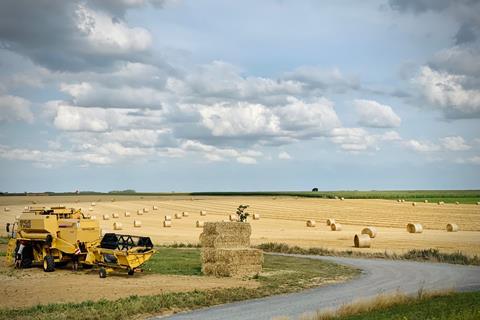
Kellogg’s has announced financial support for British farmers to increase the adoption of regenerative agricultural practices in the UK.
The large-scale wheat sourcing programme will help to “further embed sustainable farming practices linked to soil health, water and biodiversity”.
In partnership with Soil Capital, Kellogg’s will work with 25 wheat growers across almost 4,000 hectares of UK farmland, providing guidance and financial incentives.
Growers will have access to tools to combine field data, soil measurements and satellite monitoring to track selected indicators over time.
One wheat farmer said the support he has received allowed him to “decrease the amount of fertiliser used in favour of organic poultry manure, which is kinder to the soil and improves organic matter”.
“Every farm is different, and increasingly unpredictable weather means we have to think carefully about what will work for our land,” said Nick August, a farmer in West Oxfordshire. “Having practical guidance helps us make changes that protect our soils without losing sight of the commercial realities of running a farm.
“Being rewarded for making those improvements helps us keep moving in the right direction.”
Kellogg’s investment with Soil Capital will establish a five-year partnership supporting 100% of the company’s UK wheat.
Early programme data from the 2025 harvest shows that for participating farmers direct drilling, one of the core practices used to improve soil health and farm resilience, across the whole farmed area increased by 13.8% and specifically for wheat area it increased by 56.1%.
“At a time when UK farmers are facing challenges, from unpredictable weather to pressure on productivity, we’re proud to support wheat growers to adopt practices intended to strengthen the resilience of their farms,” said Dean O’Brien, UK general manager at Kellogg’s.
Agriculture accounts for two-thirds of the cereal company’s scope 3 greenhouse gas emissions. It was investing in on-farm practices to reduce emissions in its supply chain as well as supporting UK growers to use more sustainable practices, it said.







No comments yet