
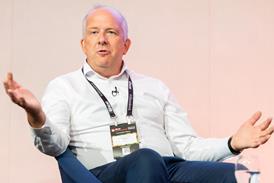



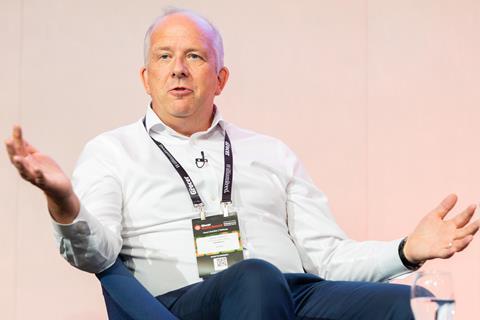
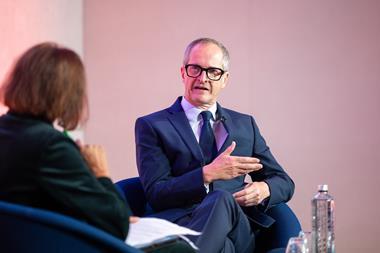
Sainsbury’s CEO Simon Roberts has told The Grocer Health Summit “health and wellbeing have to be at the very core of how we think and what we’re doing for customers”.
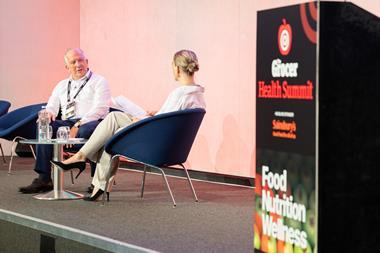
In an interview with Charlotte Hardie, MD of retail and grocery content at William Reed, Roberts outlined that the food industry and government must have clear priorities: to deliver healthier outcomes, better food resilience and give customers more of what they want in an accessible and affordable place.
“It’s a big challenge but also a big opportunity to help customers find more of what they want every time they shop,” he said.
A focus on affordability, availability, innovation and education have all been at the top of the retailer’s checklist, with fibre having been a particular buzzword in recent months. In June, Sainsbury’s launched new ‘Full on Fibre’ labelling across more than 500 products to help customers boost their fibre intake. This labelling has since rolled out to more than 850 products.
“Our meal deal is pretty popular. We questioned how we put more fibre in our products, in our salads, and how we offer more fruit food alternatives,” said Roberts. ”Now a third of your fibre consumption can be in your meal deal for £3.95 a day if you choose to come and get your lunch with us.”
Sainsbury’s also has a long-standing policy of making sure that for its own-brand products, suppliers are given clear guidelines on additives, colourants and sweeteners. “We’ve just launched a range of nitrate-free bacon and we don’t put aspartame in any of our drinks. We make these choices and we expect our suppliers to be equally thinking about this,” he explained.
Another focus area of the supermarket has been the affordability of nutritious products, including making sure healthy essentials are included in its Aldi Price Match each week. At least 75% of the choices in Sainsbury’s scheme are now classified as healthy or ‘better for you’.
Loyalty can also make a “really big difference”, Roberts noted. “We’re doing a lot with Nectar to really help point customers towards some of the choices that we think if they knew more about it, they would make.”
The importance of collaboration
Sainsbury’s relationship with suppliers and farmers has “never been more important”, he added.
“As we think about healthier outcomes for consumers, we have a real opportunity to grow and produce more food here in the UK. Our UK self-sufficiency is not where it needs to be, and that’s going to require changes in planning policy to put more food production on the ground in the UK.”
He explained that making sure there is a common standard of reporting on health will be one of the biggest topics to focus on moving forward. Sainsbury’s, among other major food and drink businesses, has been a long-term advocate of the introduction of mandatory healthy food sales reporting across the UK.
“It puts a really clear, consistent playing field in place for the whole industry,” Roberts said. “We’ve been very clear; it has to apply for in-home as well as out-of-home so everyone’s working to the same objective. But we need the same accountabilities, a clear measure, and a clear direction for what we need to report against to really get a common standard.”
Following PM Andy Burnham’s visit to a Sainsbury’s store last month, Roberts said it was “super clear that he’s very focused on this industry and how important it is in terms of the conversation we’re having, which is how does the everyday economy, of which the food industry is a really key part of, play its part in a healthy nation”.
“We all know that in the end, the health of this nation needs to improve. British farming being powered to support more production to help produce and grow more food was very much on his agenda. My hope would be that we would make the food system and improving the food system absolutely central to our growth plan.”
While the UK grocery industry is “one of the most intensely competitive markets in the world”, Roberts said there are times when “we have to really come together and collaborate for system change, we have to show up to government with a really clear view of what’s needed”.
“In the end, unless you see health as an opportunity to not only do the right thing, but actually to be competitively more successful, then you probably won’t make the right decisions.”





No comments yet