




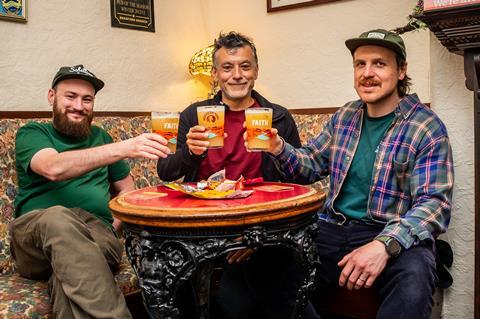
Northern Monk’s founder has warned his brewing peers risk becoming “collateral damage” by chasing the fruit lager trend, despite the segment outperforming craft beer in retail.
Fruit beer was “not something we’re actively pursuing,” Northern Monk founder Russell Bisset told The Grocer, adding the Leeds-based brewer was instead focused on its flagship hazy pale ale Faith.
“Faith is front and centre of everything we do, and I actually think it caters to so much of the of the flavour profile that people are seeking in those fruit beers,” he said. “It has a really broad appeal.”
With the craft segment having shed £31.2m in retail sales in the past year [NIQ 52 w/e 18 April 2026], many craft brewers have looked to pivot to fruit beer in search of growth. Fruit lager sales have climbed by 21.3% in the past year, albeit from a much smaller base.
But Bisset cautioned his peers against putting all their eggs in the fruit beer basket.
“One of the bits of feedback we get from retailers is they are getting inundated with fruit beers,” he said. “We’ve seen a lot of craft players pile into that category, and more often than not at their peril. We tried it a couple of years ago with a beer called Sup Lime and it didn’t do as well as we’d hoped.
“All these things are cyclical. Do I think fruit beer is going to be here in the same way in two or three years time? I think two or three brands will stand out, and they’ll be the ones that stick, and there will be a lot of collateral damage.”
Craft malaise overplayed?
In contrast to the malaise of the wider craft segment, off-trade sales of Northern Monk’s beers have climbed 6.5% to £15.1m in the past year [NIQ].
Some of craft beer’s struggles were being overplayed, the business’s new CEO Damian Guha insisted.
“If you look at the category at the moment it is quite polarised,” he said. “Obviously some of the really big players are at the moment having quite a tough time, and we have sadly seen some smaller breweries that haven’t made it. But the majority of the category decline is among the major players.
“We see our products and our brands really resonating with younger drinkers and doing really well. Beer is an evergreen category, yes there are cycles and ups and downs, but it is not going anywhere.”
Indeed, Northern Monk was again looking to increase the size of its Sydenham Road brewery site, having maxed out the additional capacity it added in 2024, its CEO revealed.
“Keeping up with demand is one of the challenges we have,” he said. “We are looking at how we can increase the capacity in our brewing operations, and the investment needed to do that.”
The brewer was doing “everything we can” to keep production in the north of the UK, Bisset said. However, it would continue to use contract brewing “as a safety valve” for when demand exceeded its capacity to supply the trade, Guha added.
Trading profitably
Annual revenues at Northern Monk grew by double digits in 2025 and would hit £20m this calendar year, revealed Bisset. The business had originally forecast hitting this milestone in the 52 weeks to last August, but was scuppered by delays in opening some of its new bars.
“We have six bars now, but some of those open later than forecast,” he said. “That was the main impact of that miss, but we will make up all that ground this year.”
Meanwhile, the business was “now trading profitably” on an EBITDA basis, having undertaken “some really difficult work” to cut costs and drive efficiencies in the past 12 to 15 months, Guha said.
Pre-tax losses at Northern Monk fell by just £154k to £2.0m in the year ended 31 August 2024. However, the brewer was now on track to record an annual profit on a pre-tax basis “12 months forwards from today”, its CEO added.
Prior to joining Northern Monk in April, Guha was chief executive of food ingredients business Vibrant Foods from 2022 to 2025.
Before that, he led UK and Irish markets for The Flora Food Group (then Upfield), after Unilever sold its spreads business to private equity firm KKR in 2018.





No comments yet