


Olive oil prices are facing upward pressures once again as “seismic” events in the vital Spanish market create fresh uncertainty for UK suppliers.
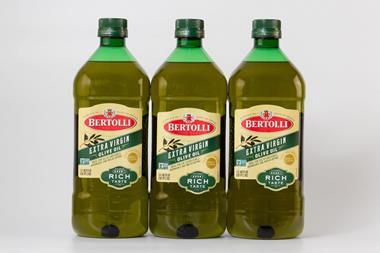
Spanish producer Dcoop and bottler Acesur teamed up to strike an agreement to buy Bertolli owner Deoleo in a €520m (£429m) deal last week that will create a new European olive oil giant. The news was quickly followed by the Spanish government ordering almost 200,000 tonnes of the country’s olive oil to be withheld from the market until September 2027 to arrest falling wholesale prices and protect grower margins.
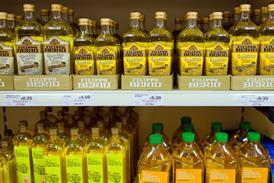
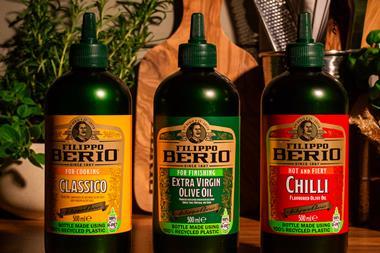
Walter Zanre, the UK boss of Filippo Berio, which buys oil in bulk from Dcoop, warned the consolidation and unprecedented state intervention could trigger prices to rise given Spanish supplies account for around 70% of the UK category.
“The Deoleo acquisition is a historic and seismic event in the olive oil world,” he said. “Dcoop is going to be in a position that’s so strong it can probably dictate market prices.
“Dcoop’s ultimate purpose is to deliver value to its cooperative members, and the way to do that is by holding up prices. I can see a scenario where Dcoop has a transfer price to its branded businesses and a higher price for supply to bottlers and other market partners. It will have sufficient commercial strength to make it stick once the Deoleo deal completes.”
The government intervention measure is the first action of its kind to be adopted in modern Spain. It results from an expected bumper harvest for 2026/27 of 1.6 million tonnes of olive oil, a rise of more than 23% on the previous season, on top of the almost 360,000 tonnes in reserve stock, which is also 23% up on a year ago.
Spanish mills must now withdraw 12% of olive oil produced, but can choose whether to pull extra virgin, virgin or lampante oil, which is the raw lowest grade used for refining.
The move has triggered an immediate jump in Spanish wholesale prices, with online tracker Pool Red recording an 6.3% rise in extra virgin olive oil traded prices to €3,223 per tonne.
It comes as prices in the European market as a whole fell dramatically from a high of €9.06/kg on 3 January 2024 to €4.51/kg on 1 January 2025, as the sector recovered from a period of drought and poor harvests, according to price reporting agency Expana. Its benchmark average dropped further in 2025 and 2026 to sit at €3.30/kg as of 4 November.
But “even if prices come down in the short term, they won’t come down as much as they should have without these two significant events”, Zanre argued.
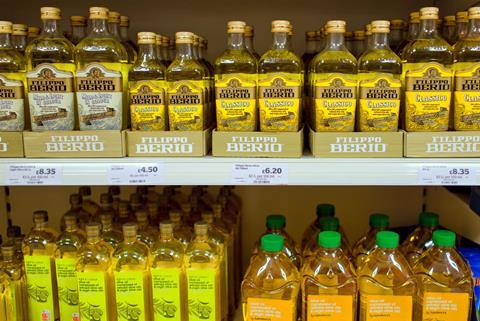
Olive oil prices in UK supermarkets have come down in the past year but are still not reflective of the drop in wholesale markets, according to Gary Lewis, head of business development at KTC Group.
“Retail hasn’t reflected the drop to the current prices because supermarkets are still working through inventory contracted earlier in the year when costs were higher,” he told The Grocer.
“Because retail prices never fell in step with the wholesale prices, there is no real margin pressure pushing shelf prices higher. The state intervention doesn’t suddenly reverse that buyer dynamic.”
Lewis understood the frustration of farmers in Spain who felt the current price was unviable and too close to production costs after two years of drought, but he said the intervention was a “cynical attempt to support prices”.
“Lower prices were finally beginning to revive consumer demand. Trying to force the market up is short-sighted. Extreme prices hit demand over the past two seasons, and price-sensitive consumers will switch back to sunflower oil if olive oil gets pushed too high,” Lewis said.
“UK retail buyers are fully aware of what’s happening in the groves. They know Spain is sitting on an official 1.6 million-tonne estimate, Andalusia has seen exceptional growing conditions and subsoil moisture tables are fully recharged from recent rains. Once harvesting and processing ramp up through January and February, crop figures could be revised even higher. Buyers aren’t going to panic into paying inflated prices when they know the physical volume is out there.”
He added Spain ran a serious risk of shooting itself in the foot. “Withholding volume only works if you control the entire supply, but Morocco, Tunisia, Italy and Greece are all expecting decent crops. Artificially holding back oil is likely to help other countries enter new markets.”
Zanre said the Spanish intervention was “a bit of a gamble”. “It’s throwing the dice that the 2027/28 harvest isn’t going to be so good. If the next harvest is another good one, then you’ve got double trouble because you’ve got even more oil sitting around.
“Buyers expect prices to fall. Sellers are expecting prices to hold firm. We need to see who blinks first.”





No comments yet