



OC&C’s annual ranking of the UK’s 150 biggest suppliers shows an industry that has been tested by war, inflation and climate pressures, yet still delivering growth from a tough position
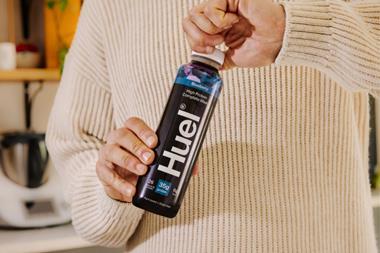
A can of Monster Energy, a packet of Fox’s biscuits, a bottle of Huel powder: three very different bets on how Britain eats and drinks now – and this year, all three paid off. Across the UK’s 150 biggest food and drink suppliers, the same held true. Despite a year of flip-flopping tariffs, wars in the Middle East and scorching summer temperatures, the businesses that worked out what shoppers actually wanted kept growing regardless.
🔔 Get INDUSTRY INSIGHT direct to WhatsApp
That’s the headline finding of this year’s OC&C top 150 food and drink suppliers report, which ranks the UK’s largest manufacturers. On this year’s list, the vast majority (77%) grew their revenues, with more than a quarter (28%) growing sales by more than 10%.
“The industry has stabilised at a tough place,” says Will Hayllar, global managing partner of OC&C. “Looking back over 2025, it was a calmer macroeconomic environment than the previous three or four years. But it’s still not easy.”
Among the winners in the survey was Hilton Food Group, whose revenues swelled 10.3% to £4.2bn to depose Associated British Foods (2) as the UK’s largest supplier. Other beef suppliers, supported by soaring prices, likewise pushed higher, with Dawn Meats’ (12) revenues up 20.3%, Kepak (28) up 32.6% and Foyle Food Group (42) up 21.3%.
Underpinning this was a surprisingly resilient consumer. Through late 2025 and early 2026, the UK managed the second-fastest growth among the G7. “Every year a new shock or conflict emerges. But there’s almost ‘bad news fatigue’ among consumers and most have realised there hasn’t been mass unemployment,” Hayllar adds. “People are starting to get used to it.”
Nonetheless, both margins and volumes remain under pressure. That means suppliers faced a difficult balancing act: chasing growth through scale and/or betting on their ability to ride powerful undercurrents.
Such difficulties have seen major players tumble, with ASR Group (52) falling 25 places, Fever-Tree (86) down 21 places and JW Galloway (99) down 44.
“We’ve been through a lot of big shocks over recent years and we’ve had to wrestle our way through big changes as an industry,” says Finsbury Food Group CCO Graeme Clark. “The winners in that space are those who can react to the challenges. But you really have to knuckle down – it’s not easy to come by growth.”
State of the economy
Food prices have settled considerably over the past two years, laying the foundations for steadier trading. Barring a mid-2025 spike led by meat, cocoa and coffee, prices have largely risen more slowly than wages amid fierce competition among retailers. That’s thanks in part to falling input costs. Suppliers’ profit margins have continued to rebuild and now fall roughly in line with their post-2015 average after three successive years of recovery.
Volumes sold through the supermarkets recovered 0.4% in 2025 after a three-year decline and continued to build in the second half of 2026. But the recovery is far from even. Just half of the top 150 managed to improve their profit margins, although 77% increased profits overall – and the pressure will resume next year.
“Costs have been easing, but we’re yet to feel the impact of that extraordinary weather we had over the summer. And we’re waiting for the impact of the Iran war to come through – energy prices are still extraordinary, and businesses are struggling with the cost of logistics,” says Rebecca McCredie, director of investment bank Cavendish’s consumer practice.
“Manufacturers have been trying to absorb a lot of these costs, because they recognise the end consumer is struggling.”
With retailers locked in a battle for market share, suppliers have had little room to pass on rising costs – but that can’t continue indefinitely. The FDF and IGD both forecast food price inflation will pick up in the later part of 2026 and remain above 5% for much of the next two years. And the picture may worsen thanks to a record El Niño, predicts OC&C partner Nilpesh Patel. “That’s not going to hit every category equally, but it’s likely to have a big impact,” he says. “When we’ve looked at this in the past, after El Niño, food inflation is typically at 6% or 7% the year after.”
Rob Sexton, CEO of Yeo Valley (61) agrees that “this volatility is not going away. These economic crises are going to be driven more and more by the climate crisis and, until we get meaningful action, that won’t change. Input costs are going to become increasingly volatile, and reliance on the global commodity market will become more and more risky.”
The supermarkets are facing their own challenges. Ever since the discounters’ rise in the mid-2010s, “grocery retail margins have never really recovered” past about 3%, explains Hayllar, as mainstream grocers put in “huge effort” to price match large parts of their range.
That squeeze has fuelled talk of consolidation. The “pressure is definitely there”, adds Patel, as highlighted by news of merger discussions between Sainsbury’s and Morrisons held last winter. But the more immediate strategic focus has been the growth of premium own-label ranges – a gambit in part designed to beef up retailer profits. It’s proven a successful play, with Tesco Finest and Sainsbury’s Taste the Difference both growing above 15% in their latest financial year.
The consequence has been another year of own-label outperformance, aided by market share gains from the discounters. Even stripping out exceptional entries, to adjust for M&A activity, own-label suppliers grew revenues by 6.2% compared with branded players’ 3.3%.
“Prices went up and never went back down,” says Alastair Lockhart, insight director at Savvy Marketing. “So shoppers will trade up for things that matter, but trade down for things that don’t – and that means an increase in own-label participation.”
At a time when retailers are actively cutting back their ranging to shore up margins, this means brands have to think carefully about differentiation.
Where’s the growth?
The premiumisation of own label is one symptom of a bifurcated market, where shoppers trade down from mid-range products to affordable goods and trade up for occasional treats – or bring spend in from outside the category by replacing a takeaway with a premium dine-in deal.
The market is split between the 30% to 40% of UK households that are “really struggling” to balance weekly budgets and those who can pay more, says Hayllar. “For the former, the absolute value of food is the primary motivation and they have less flexibility. But that more affluent, middle-class set is ultimately able to make choices.”
This helps explain M&S’ growing market share – now at 4.1% of grocery spend, it claims – and the race for premium own-label meals. For the right occasion, however, even struggling households will trade up.
“Less affluent customers increasingly buy into some of those premium propositions and trade away from takeaways or eating out, which has become very expensive,” says Patel.
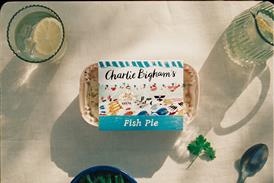
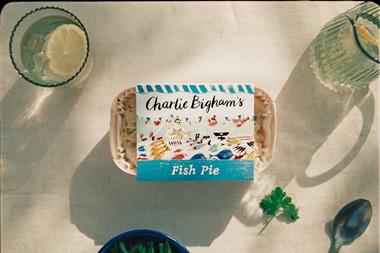
“Value doesn’t mean cheap,” explains Patrick Cairns, CEO of Charlie Bigham’s (144), which has won sustained growth over recent years despite its premium positioning. “Value means offering more quality, sometimes more convenience or better ingredients, for the money you’re paying. Consumers in a tight market become increasingly savvy to that. They ask where the value is, and it’s a long-term trend.”
Another of the clearest drivers of growth is health. “The crap state of the NHS means you need to stay healthier: if you get ill, you’re screwed,” says Lockhart.
Equally transformative has been the arrival of GLP-1s. While modern nutrition and government regulation has focused on removing sugar, fat and salt from diets, users – and often their families – increasingly require their meals to be packed full of nutrition.
“We went through the era of ‘what isn’t in my food’ – so low calories, diets, all of that,” says Sexton. “Now we’re in the era of ‘what is in my food’ – so we’re talking natural proteins, fibre, gut health and everything else.”
Of course, suppliers aren’t “just targeting the 5% or 6% of the population on GLP-1s”, says Patel, they’re “addressing a much wider portion of the population” as breakthroughs in gut science have pushed fibre into the spotlight and growing awareness of ingredient lists has driven scepticism over artificial additives and demand for ‘natural’ products.
“Consumers are thinking about the impact on their bodies of what they’re eating. But there’s not necessarily a clear consensus on what’s relevant or for which consumer segment,” says Hayllar.
Protein has emerged as a clear winner, thanks in part to it finally providing a useful output for the enormous quantities of whey produced by dairy companies. Arla (4), Müller (8), Danone (21) and Yeo Valley have all benefited from interest in protein-rich products.
“Protein is absolutely the right market to be in,” says Hilton Food Group CEO Mark Allen. “Quality, nutritious food is a long-term trend and we’re well-positioned to benefit from it.”
GLP-1s, alongside consumers’ newfound appreciation for ingredients, is an “amazing opportunity” for the sector to clean up its products and achieve growth while doing so, says Sexton. “It’s no longer a race to the bottom of how you can strip out as much as possible. Helping consumers with clean, good value food that serves those needs is a genuinely rare opportunity.”
Healthy business, healthy growth
Capturing that spend requires investment, and acquisitions remain one of the most popular ways to access growth, especially for larger players looking to mitigate rising input costs.
“Larger businesses are asking themselves how they can remain competitive while maintaining their margins,” says McCredie. “They’re looking at their portfolios and wondering how to increase their scale.”
Consolidation plays saw Bakkavor (14) folded into Greencore (13) to double its turnover to £3.9bn, while AgroBerries’ (24) revenues climbed 90% after it acquired BerryWorld. ABF-owned Allied Bakeries’ purchase of Hovis (60), meanwhile, may well have saved the brand from failure.
Yet for others, including Finsbury Food Group (57), the opportunity is not just scale, but innovation. “Bakery is a very mature category. So we’re always looking to push our innovation agenda – and M&A is a very useful tool in that space,” says Finsbury’s Clark. The business has gained around £50m in sales through acquisitions and is back in organic volume growth. Elsewhere, headline-grabbing deals such as Danone’s €1bn purchase of Huel (98) highlight the value placed on nutrition-focused brands.
Yet rising input costs have also pushed capex – and AI – firmly on to boards’ priority list. Capex rose 18% last year, with the relative stability of 2025 and 2026 helping encourage that spend, Hayllar adds, alongside significant advances in AI and automation.
Finsbury, for example, has reached a “historical peak” of investment and is rolling out an AI programme across the business.
“We’ve got two huge capital investment programmes, which are going to drive incremental growth, and an automation programme. We try to be artisan at scale, and the only way you can do that is to remove non-value-add tasks, allowing us to control our headcount,” says Clark
Labour has been a particular driver of that spend. “There’s been a steady increase in pressure on the cost and availability of labour, all of which drives investment,” says Hayllar. “Historically, it’s been an industry that’s pretty low on capital investment, and in some ways it’s catching up – but the imperative to do so is only increasing.”
Staff costs among the 150 have risen 6% on average each year since 2021 – representing a 31.4% total increase in payroll spend in five years.
“In the past 18 months, the real pressure has been on labour costs,” says Cairns. “We’ve seen big increases to minimum wage, tax increases through National Insurance and a lot of cost from packaging. Food is a very competitive and tight-margin business, so we’re under constant pressure to become more efficient.”
The future
In shoppers’ pursuit of value, both high- and low-end goods are winning out. “But most brands play in the middle, so it’s been challenging for them,” says Sexton.
For those not suited to a shift into health, the fight for relevance has to be won another way: through trust.
“That’s a challenge brands need to lean into and ask: ‘What are we bringing that makes it worth trading up?’” reckons Yeo Valley’s Sexton. For the organic pioneer, it’s all about provenance. “Brands can be really transparent if they want to be – much easier than own label,” he adds.
It’s an argument borne out by the success of Bold Bean Co and Pip & Nut – the latter of which recently appointed bankers to handle a reported £100m sale. Both market themselves on quality, often through organic, social media-led engagement with consumers.
Not every winning brand is selling trust, though. Consumers are just as happy buying based on pure function, with energy drinks powering growth at Monster (70), Coca-Cola Europacific Partners (5) and Red Bull (30).
Again, it’s products’ additional value powering growth. Pricing will always come first, but as this year’s top 150 shows, compete on price alone and you’re in a race to the bottom. The question for next year’s list is whether that’s enough when the next shock, whatever that is, inevitably arrives.
‘The tables are turning’: reasons to be optimistic about M&A
Over the past two years, fmcg sector dealmakers have watched jealously as investment poured into the tech sector. But the “tables are turning” and private equity investors are returning to food and drink, according to Cavendish consumer director Rebecca McCredie.
“I’ve looked on at my colleagues with envy over the past two years. They’ve had an extraordinary rise in deal volumes and values, but food and beverage has had a really tough time,” she says.
With many existing PE houses in the sector struggling to exit amid a subdued market, and a high cost of debt making the sector’s low margins unattractive, many PE firms have stayed away from food and drink.
But now, McCredie’s team has noticed a “really significant” uptick in inbound pitches as jitters over the tech sector’s sky-high valuations sets in. “It feels as if PE has finally overexposed itself to tech,” she adds.
Rob Iseman, MD in Piper Sandler’s European consumer team, has seen “signs of a reversal”, too.
But while overall dealmaking levels are steady – there were 80 UK-based deals in 2025 and 61 so far in 2026 – that number has been carried by major strategic transactions.
Sub-sectors such as protein and ingredients have been particularly active, as larger companies fight for product and innovation capabilities and greater exposure to the UK and European markets, according to Rob Horton, head of Stephens’ UK consumer practice.
Horton says he has seen the UK food market “gather momentum” over the last 12 months thanks to these trends.
”That depth of strategic appetite is an encouraging sign for the market’s prospects and an endorsement of the strength of the sector.”
“Buyers have been selective, disciplined, and processes have tended to be narrower,” adds Iseman. “But the market is open and deals are getting done.”
Notable examples include Greencore’s combination with Bakkavor, completed in January 2026, Danone’s €1bn (£800m) purchase of Huel in September and Unilever’s roughly $34.8bn (£30bn) sale of its food business to McCormick.
These megadeals have been driven in part by a need for consolidation in lower-growth categories, Iseman explains. “That has been accelerated by the retailers’ increased focus on security of supply.”
That same pressure will mean more acquisitions of small companies playing in channels with growth tailwinds – such as health and wellness.
“The larger strategic players are recognising those are really strong value drivers. And you can’t neglect GLP-1s,” McCredie says. “Any kind of business that has longer-term exposure to those changes in consumer behaviour will benefit hugely – it really makes me cautiously optimistic about food and beverage M&A.”



No comments yet