





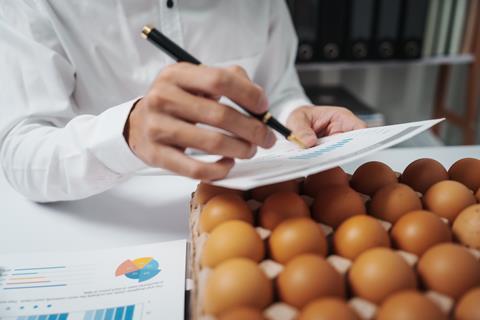
The number of salmonella cases linked with imported eggs has risen to 586, the UK Health Security Agency has confirmed.
In means the total number of cases detected as part of its ongoing investigation into three outbreaks of salmonella enteritidis has increased 6.7% since its last update, released on 10 September.
As of 15 September, 355 confirmed cases and one death have been linked to cluster t5.9411, with 42 cases and one death tied to cluster t5.9765, and 189 cases and no deaths associated with cluster t0.24068.
Salmonella enteritidis is the most frequently reported variant of the bacteria, according to the UKHSA, accounting for 29.8% of the 10,406 laboratory reports of salmonella recorded in 2025.
There have been fewer cases reported over recent weeks but they continue to be associated with eating at food outlets, including small cafés, restaurants and takeaway businesses.
However, Dr Gauri Godbole, UKHSA deputy director for gastrointestinal infections, food safety and One Health said “it is too early to say if the outbreak is subsiding and we are continuing to monitor closely”.
“Our investigation to date indicates links to imported eggs. However this investigation remains ongoing,” she added. “We will continue to follow up cases and investigate any further common sources if they come to light.”
Reiterating comments made last week, Godbole said that the overall risk to public health remained “low”.
“In England, all salmonella samples from patients seen in hospitals or primary care are routinely analysed using whole genome sequencing, helping us identify and investigate potential outbreaks,” she added.
The FSA confirmed it had been communicating with food businesses to ensure their food management safety systems were effective – particularly where eggs have been used in catering or foodservice.
As previously reported by The Grocer, most eggs imported into the UK are used in foodservice or manufacturing, while shell eggs available on supermarket shelves are British. Of these, well over 90% are produced under the British Lion scheme – which vaccinates hens against salmonella.
“We continue to work closely with the UKHSA and other partners to investigate outbreaks of salmonella enteritidis,” said FSA chief scientific adviser Professor Ian Young. “The exact causes of these outbreaks have not yet been identified, but investigations so far have identified links to imported eggs.
“There is no evidence that UK-produced eggs are affected.”






No comments yet