
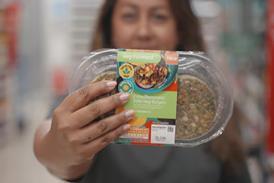



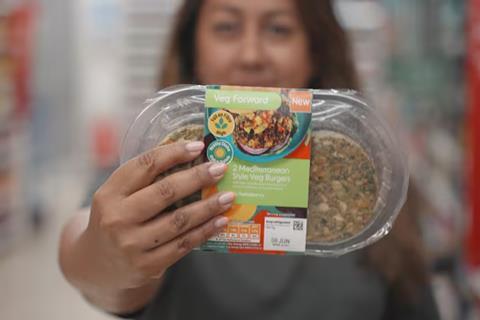
Sainsbury’s has kicked off a new health strategy, beginning with a focus on fibre. In June, the supermarket giant rolled out ‘Full on Fibre’ labelling across hundreds of products to help customers boost their fibre intake and better understand which products contained the nutrient.
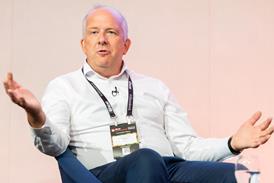
In fact, Sainsbury’s CEO Simon Roberts stated that “health and wellbeing have to be at the very core of how we think and what we’re doing for customers”, when speaking at The Grocer Health Summit on 15 September.
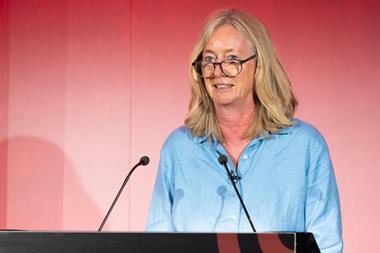
We sat down with Sainsbury’s head of healthy and sustainable diets Nilani Sritharan to discuss how the retailer is looking to promote healthy and affordable diets, the changing landscape of health in food and drink, and how the wider sector and the government can play their part.
How is Sainsbury’s encouraging customers to choose healthier, more nutritious options?
Ultimately what we need to do is make it easy for customers who are super busy in their lives and don’t want to have to think about what to put on the table for dinner. What we’re trying to do is make that super intuitive and labelling is a good, easy way in which we’re doing that. We have our Healthy Choice label on over 1,250 products now and we also recently introduced Full on Fibre labelling across products that contain fibre to make it much easier for customers to navigate to those better choices.
In terms of our meal deal, we’ve reformulated 12 of our sandwiches to add more fibre in. We’ve also thought about the availability of fibre-containing snacks and drinks and then looked at innovation. Across our salads, there are now several products that are very high in fibre and as a result, you can easily meet a third of your daily needs for fibre from a meal deal, which is either just £3.95 or £5.50.
How is Sainsbury’s making healthy food more affordable for customers?
Our Aldi Price Match is one way – we have one of the most extensive offers in the market and 75% of that is healthy or ‘better for you’ choices. We’ve extended that into convenience so no matter where you’re shopping, you’ve got that choice and that availability. On top of that, there are personalised offers helping to navigate customers to healthier choices.
We also look at reward and incentive, such as the Healthy Choice Challenge. Going live on 16 September, it’s about rewarding customers for making the right choices. In previous years, we have seen a real uplift in sales as customers tend to put more of those products in their basket. It’s had some really encouraging results and we continue to fine tune that and test to see what’s working for customers. We’re always trying to find ways to help offer points, rewards, gamification, and make it fun, so that eating well can be joyful as well as easy.
When considering GLP-1s, how is Sainsbury’s preparing for a completely different customer need?
The big thing is that nutritionally speaking, we have developed a range of products that can meet that customer need. The Small But Mighty range is developed to be for smaller appetites, it’s higher in fibre, higher in protein, and that’s actually also good for an ageing population who will have lesser appetites.
What has changed most in your thinking about healthy diets in the past five years?
We used to be very focused on product ranges, so using reformulation and innovation to meet specific health needs. Now, we have really shifted to thinking about how we retail and what we can do right across the store to help navigate customers to better choices. It’s not just about the products; it’s about making them aware, making them more discoverable in the store, incentivising customers for better behaviour or healthier behaviour, and thinking about that total offer.
What are the biggest changes that need to happen in the average UK shopping basket over the next five to 10 years?
It’s about the balance of the foods we’re getting, the diversity of the foods we’re choosing, the nutrient density of those options, and it is about a culture shift. We need to stop thinking of healthy food as boring or restrictive, but actually as something to celebrate, something to really enjoy and look forward to going home to prepare. That is the job of us as the food industry to help make that as inspiring, joyful, and colourful as possible.
How can the wider food industry and the government help in improving healthy diets?
Mandatory reporting is a really good example. We’re already reporting our healthy sales and we’re one of the first companies to do so. We believe the whole sector has to do this – it can’t just be supermarkets reporting, otherwise you just see those sales shift into the exempted category. We’ve got to see it as an out-of-home, in-home, catering, full-sector procurement approach and that’s also true for existing regulations. We’re quite a regulated area, particularly in the health space. If you think about the placement regulations and advertising, how do we make sure that is a level playing field? At the moment, there’s a lot of inefficiency in the system, and not everyone is exposed to the same regulation. So we need to have much more of a level playing field and seeing that extended out to the full sector would be a good thing.
The Grocer Health Summit took place on 15 September 2026. Register your interest for the 2027 event here.





No comments yet