






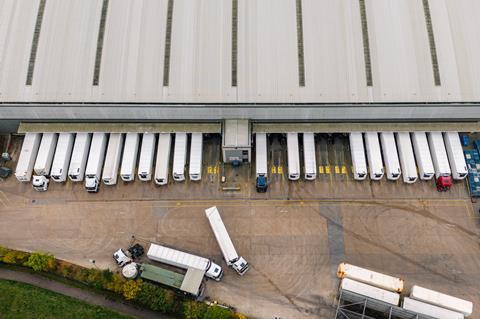
UK food supplies are increasingly at risk of disruption because the government has failed to recognise the vulnerability of the UK’s cold chain, a major new industry report has warned.
The temperature-controlled network underpinning up to half of Britain’s food supply has been largely overlooked in national resilience planning and is “not acknowledged as critical national infrastructure”, according to the Cold Chain Federation’s Critical Link white paper, launched this week.
This left the system dangerously exposed to shocks ranging from energy outages and fuel shortages to cyberattacks and conflict-driven disruption, the report warned.
“The role of the cold chain is shamefully undervalued in UK food security and resilience policy,” said CCF CEO Phil Pluck.
“With threats to food supply increasing at a terrifying rate and other countries around the world looking at stockpiling essential products to keep citizens fed in an increasingly volatile world, there is a need for urgent action to recognise the role cold chain plays in society,” he urged.
“The industry must be supported to manage future crises and to grow sustainably to meet the needs of a changing food system.”
Nearly half (49%) of the food and drink produced and sold by UK manufacturers – worth around £50bn – relied on chilled or frozen supply chains, the white paper noted.
Yet “people rarely question where their food comes from, least still how it came to them, however disruption quickly leads to panic, stockpiling, and as studies have shown, can very quickly can result in civil unrest”, it said.
Food security role ‘unrecognised’ by government
And despite the sector’s critical importance, its “role in resilience and national security is almost entirely unrecognised in policies and reports assessing food resilience and crisis planning”, the trade body added.
“Food-critical infrastructure is not mapped in the UK. Many parts of the cold chain remain invisible, making it difficult for planners to identify and prioritise critical food hubs for crisis planning,” it said.
That came despite the National Preparedness Commission’s 2025 Just in Case report “extensively” detailing the UK’s lack of preparedness for food system disruption, and calling for a shift from ‘Just in Time’ to ‘Just in Case’ models.
“The lives of UK citizens are at risk without a plan to ensure access to food when the next crisis hits. The stakes could not be higher,” the CCF warned, noting the cold chain “directly adds £14bn gross value to the UK economy each year, supporting 184,000 jobs and contributing £3.7bn in tax revenue to the UK government”.
Future government efforts to boost resilience would “rely heavily” on cold chain infrastructure, yet current policy made “scant reference” to the sector, it added. “Without remedying this oversight, government action is destined to fail the UK citizen.”
‘Critical national infrastructure’
The CCF has set out 10 “urgent” steps to address the gap, including formally designating cold chain infrastructure as critical national infrastructure, embedding it in the National Risk Register, and granting permanent essential worker status to staff.
It also called for clear Cabinet Office accountability, early warning systems for threats ranging from cyberattacks to extreme weather, and new incident response and disaster recovery plans with prioritised energy access.
Further recommendations include expanding cold storage capacity to support future stockpiling, embedding the sector in planning policy, mandating joint industry-government infrastructure assessments, and boosting recruitment into key roles such as HGV drivers and refrigeration engineers.
“Without a strong and robust cold chain, the UK cannot achieve food security and without a thorough plan to ensure the cold chain can operate during threats and crises that impact it, the UK does not have food resilience,” the CCF said.
The warning comes as Logistics UK this week highlighted similar pressures across the wider supply chain, with geopolitical shocks – particularly via the Middle East conflict – driving fuel cost volatility and operational strain.
The sector is operating on tight margins and is “highly vulnerable to the increase in fuel prices… which risk being passed on through the wider economy as inflation”, underlining how disruption could quickly feed through into higher food prices, the industry body warned.










No comments yet