




Danone has announced a partnership with Landscape Enterprise Networks (LENs) to support its British farmers to adopt long-term regenerative practices.
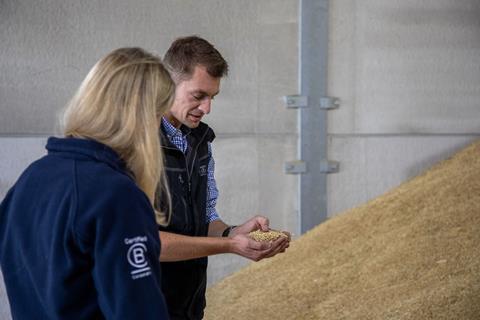
Through LENs, the funding will support farmers across more than 2,500 hectares of land including within Danone’s key oat sourcing regions.
Measures include implementing reduced cultivation systems, planting cover crops to keep soil covered during the winter and straw chopping to add organic matter to soil after harvest.
The measures have the aim to improving soil health, reducing emissions, enhancing biodiversity, increasing water resilience and reducing climate-related risks.
“The challenges facing farming and the environment cannot be solved alone,” said Hannah Cornick, sustainability and social impact director, Danone North Europe. “They require co-ordinated action, backed by evidence, and shared commitment to maintaining healthy, resilient landscapes.”
She said that the LENs programme would drive this co-ordinated action that delivers tangible benefits as well as providing robust measurement.
Danone said the partnership reflected its ambition to support a more resilient food system while protecting and regenerating the natural environment.
“Danone’s co-funding will achieve measurable impact even in year one,” said LENs CEO Donald Lunan. “Oat farmers will be implementing regenerative practices this autumn that will help reduce and remove carbon, build soil health, improve water quality and increase biodiversity, all of which contribute to greater resilience across the whole sourcing region.”
The partnership builds on Danone’s commitment to source 100% British oats for its core Alpro oat drinks and its investment in local supply chains.
Richard Maddever, an oat grower who will benefit from the funding, said it would enable his farm “to take meaningful action now to improve the resilience of our land”.
He added: “It’s an investment not just in our farm, but in ensuring we can continue growing oats for generations to come.”










No comments yet