
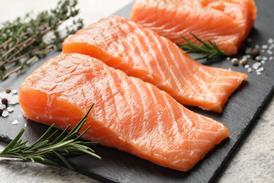

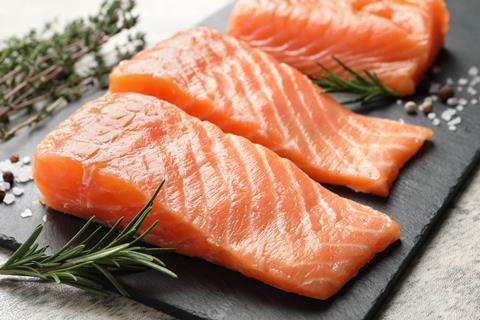
The health benefits of salmon are more important to shoppers than organic certification, new research has revealed.
A poll by The Harris Poll UK, commissioned by The Grocer, showed that while 87% of shoppers rated salmon’s health benefits as important, only 61% said the same of organic certification.
Health also had the strongest “very important” score, at 49%, which the data provider said was “good insight on why people choose salmon given the increase we have seen in high-protein ‘healthy’ foods”.
“Consumers may want stronger welfare and environmental standards while remaining motivated by nutrition benefits and affordability offered by farmed salmon,” said Steve Brockway, chief research officer at The Harris Poll UK.
It comes as last week, the Soil Association said it would stop certifying British salmon as organic saying the farmed fish industry’s environmental and welfare failings were to blame.
According to the data, 70% of salmon eaters had not heard about the decision or the associated concerns. However, 71% said they were likely to investigate the issues after being informed, including 27% who were very likely to do so.
“This indicates some consumer receptiveness once the issue is brought to their attention, so limited awareness should not be mistaken for indifference,” said Brockway. “The industry need to make clear what the concerns are, how mitigating them and what the certification change means rather than assuming consumers already understand the story/issue.”
Organic certification also ranked as the lowest of the seven attributes tested when it came to purchasing priorities with RSPCA certification, MSC/ASC accreditation and Scottish-farmed origin all ranking higher.
Nevertheless, 64% said they were likely to learn more about salmon certification schemes following the announcement.
This was a trend of the data with more consumers (71%) likely to learn more about the concerns versus the 48% who said they would be likely to reduce salmon consumption.
“The research suggests we are now in a window of consumer reconsideration rather than collapsing demand,” added Brockway. “What information is provided could influence decisions at this stage.”
Disliking the flavour was by far the largest reason for the 37% of the population who said they did not eat salmon. Some 42% gave that as a reason for never eating salmon, compared with just 2% who avoided it for either environmental and welfare concerns.
In terms of consumption, switching to wild salmon was the strongest stated purchasing response (63%), compared with the 52% likely to switch to other fish.
More broadly, the announcement appears to raise questions about fish consumption more broadly, with 54% saying they would consider how much fish they buy, which The Harris Poll UK said could damage the entire category.
It comes as salmon volume sales rose by 3.8% and value increased by 6.8%, despite an overall decline in fish sales volumes of 1.4% in the 12 months to October, according to Salmon Scotland.
Shoppers also spent an additional £104m on salmon over the past year. Nearly £1 in every £3 spent on fish in UK supermarkets was now going towards salmon, the sector body added.
No comments yet