




Fourteen global food businesses, including Nestlé, Waitrose, Lidl, Aldi and M&S, have signed a “landmark” agreement designed to scale up the use of regenerative agriculture techniques across the food sector.
The Regen Compact is an initiative devised by charity the Circular Bioeconomy Alliance (CBA), which was established by King Charles in 2020 – in a bid to “accelerate the transition towards a nature-first circular bioeconomy”.
The compact also counts McDonald’s, McCain Foods, Yeo Valley, Wildfarmed, Mars, Danone and Gail’s as initial signatories, alongside New Zealand-based meat processor Silver Fern Farms and Spanish food supplier Agrolimen.
It grew out of a roundtable event on regenerative agrifood systems held by the CBA at Windsor Castle in May this year, and “brings retailers and food companies together at C-suite level to align and scale what many are already doing to support regenerative agriculture”.
The group’s work aimed to “put farmers and nature at the centre of the food system’s transition” towards more sustainable production methods, and sought to “equip farmers with the support to make the necessary changes”.
It follows a year of extreme weather and disruption to food production globally, which is likely to be exacerbated by the current El Niño weather pattern.
Nature-first farming
In practice, the work of compact signatories could include provide long-term commercial certainty for farmers, or investment directly in farmer support, the CBA said. “Sustainable, nature-positive and regenerative solutions already exist, but they are not being adopted fast enough,” it warned.
“Farmers are having to think about how they adapt and farm in a changing climate. The compact is designed to help unlock investment and reduce barriers to adoption,” it added.
“The involvement of major food businesses and retailers reflects growing recognition that the long-term resilience of food supply chains depends on the resilience of farming landscapes,” the charity said. “By demonstrating what works, the compact aims to encourage others across the food sector to follow.”
Progress in transitioning to more regenerative production methods would be measured and reported on an annual basis, said CBA CEO Marc Palahí. This would allow the businesses who had signed up to the compact to develop a “regenerative agriculture investment playbook”, with “new financial models” due to be made available to fund transitions.
Palahí described the food system as a “main cause and victim of the climate crisis”.
“Now, paradoxically, that crisis is making food systems collapse,” he told The Grocer. “Over-simplified land management has degraded land and soils – they have lost resilience to cope with extreme events.”
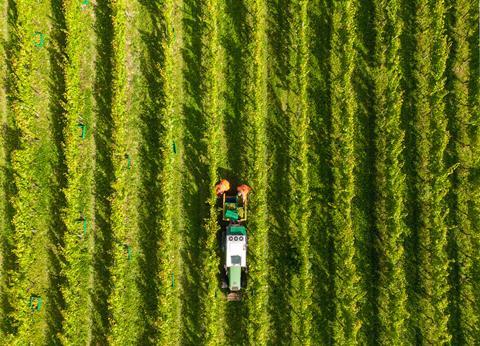
The initiative’s main aims are therefore to encourage better resilience through nature and improving biodiversity; to protect and restore soil health by minimising physical disturbance; and to drive the replacement of synthetic farm inputs with natural ones.
Its five founding principles are to be farmer-led and nature-based, to foster resilience, to take a ’whole systems’ approach, be ’context specific’ by adapting to local realities and to be both transparent and affordable.
Tipping point
Achieving these goals would reduce emissions and increase the farming resilience, Palahí argued. “The nature-climate crisis has reached a tipping point that is putting food security at risk,” he warned.
“The good news is that we have the knowledge to reverse the situation. [But] it requires transforming our food systems around nature, adopting ecological principles as the basis for delivering economic outcomes.”
Regenerative agriculture was “the greatest lever we have to restore harmony between humanity, nature and the environment, reconnecting human health to planetary health”, he urged.
Shifting towards regenerative farming methods was “critical to building more resilient supply chains for the future”, said Nestlé chief financial officer Anna Manz.
“We have made it an integral part of our sourcing approach, working with farmers and partners to drive the transition at scale”.
However, farmers could not make this shift alone, she argued. “We will continue to support them and, through the Regen Compact and other platforms, openly share our learnings to help encourage the adoption of regenerative practices more broadly.
Waitrose MD Tom Denyard said: “If we want British food on our plates in years to come, our farms have to be able to cope with summers like this one, which gave the UK its smallest harvest on record.
“Regenerative farming is about looking after the soil, so it can keep feeding us through the good years and the bad,” he added.
“Farmers are leading the biggest change in how British food is grown for a generation, and backing them has never been a side project for us. We’ve done it for years, on our own farm and with every one of our UK farmers and growers, and we intend to go further.”
However, Denyard also stressed this was “a challenge for the whole food industry. This landmark compact brings us together behind them, with farmers and nature at its core”.







No comments yet