


In 2025, cocoa prices hit a record high, Dubai chocolate swept the supermarket shelves and Penguins became ‘chocolate flavour’ biscuits. We recap the year’s most significant chocolate stories
There’s scarely been a week where chocolate hasn’t made the news in 2025, from increasing prices to new trends and changing formulations.
It all started in January, when cocoa prices hit a record high, following poor crops in west Africa, where 70% of the global cocoa supply is produced. The resulting global shortfall put pressure on chocolate manufacturers, who were forced to choose between absorbing the increased costs, passing them on to shoppers or making changes to their products to mitigate the impact.
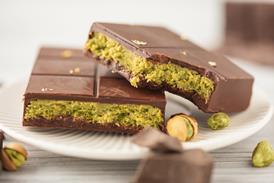
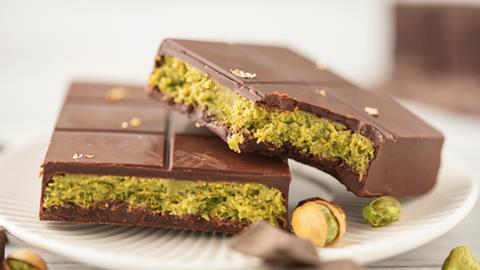
In the meantime, shoppers developed an appetite for Dubai-style chocolate: chunky chocolate bars filled with pistachio paste and pastry. The novelty factor and premium ingredients used in the bars meant that chocolate manufacturers could justify selling them at a higher price tag.
What shoppers couldn’t seem to stomach was changes to their favourite treats. They took to social media to complain of the rising price of Maltesers, shrinking Freddo packs and dark chocolate Toblerone being discontinued.
Here are the stories that best summarise the chaos of the chocolate category in 2025.
Dubai-style chocolate swept the supermarket aisles
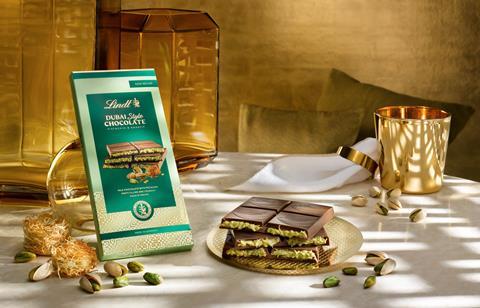
It’s chunky and filled with pistachio cream and pastry. Unless you’ve been living under a rock, you’ll have seen or tried a version of Dubai-style chocolate.
The original bar was created in 2021 by British-Egyptian entrepreneur Sarah Hamouda, with the launch of her Dubai-based business Fix Dessert Chocolatier. Hamouda’s giant Can’t Get Knafeh of It bars, stuffed with knafeh pastry, pistachio and tahini, went viral in on TikTok in 2023 after influencer Maria Vehera posted a video of herself eating one to the platform.
However, it wasn’t until 2025 that the trend went mainstream in the UK. Lindt launched its own £10 pistachio and kadayif pastry-stuffed tablet into selected stores at the end of 2024. After sell-out success, Lindt snagged Sainsbury’s, Waitrose, Ocado and Tesco listings for the tablet in 2025. So high was demand for the bars that Waitrose had to impose a two-bar limit for consumers.
Read more: Dubai chocolate: how the trend started, and how it’s grown
Lidl also had to limit shoppers to two bars when it brought its own Dubai-style chocolate bar to stores in March. The retailer had already sold out of a limited run of 6,000 bars within 90 minutes, which dropped on TikTok Shop earlier that month.
The craze stretched across categories, with retailers and suppliers launching Dubai-style chocolate biscuits, cocktails, iced lattes, brownies and doughnuts into supermarket shelves over the summer. By autumn, however, Godiva’s and Lindt’s Dubai-style chocolate bars had both been reduced in Tesco, which prompted retail analysts to conclude the hype had, finally, died down.
Chocolate biscuits became chocolate-flavoured biscuits
Manufacturers have had to contend with record levels of cocoa inflation this year. While Mars and Cadbury shrunk some of their treats to mitigate soaring costs, McVitie’s and Nestlé instead reformulated their products to contain less cocoa.
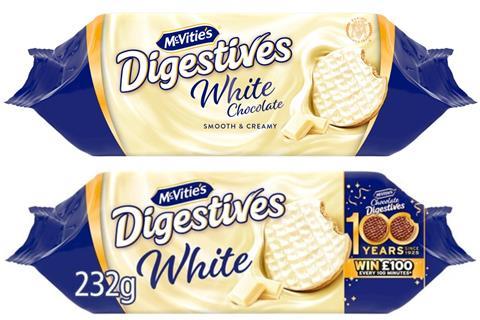
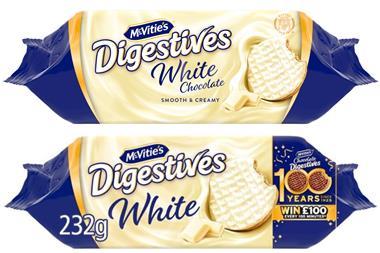
In July, The Grocer reported that White Digestives and White Kit Kats could no longer be classified as white chocolate. That’s because their coatings contained less than the minimum 20% cocoa butter required in white chocolate, following cost-saving recipe changes by the brands.
Read more: Is it chocolate? How soaring cocoa costs are changing cakes and biscuits
The reformulations didn’t end there. In October, The Grocer reported that McVitie’s had transitioned Penguin and Club biscuits to a “chocolate flavour coating”, as they no longer contained enough cocoa to lawfully be called chocolate.
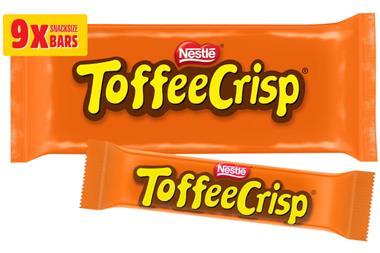
It wasn’t long before Nestlé was up to similar tricks again. As reported by The Grocer in December, Toffee Crisp and Blue Riband had also transitioned to a “chocolate flavour coating” due to ”significant increases in the cost of cocoa”.
Tony’s vowed not to change – and urged retailers to do better
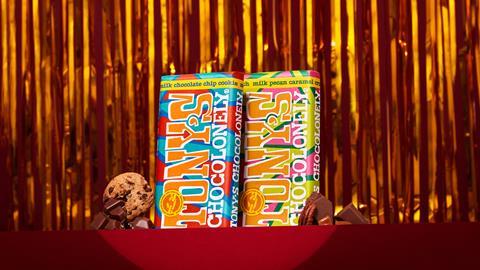
Like all chocolate suppliers, Tony’s Chocolonely has had to make some difficult decisions to mitigate the impact of soaring cocoa costs. As reported by The Grocer, pre-promotional prices of its products have risen by an average 12.6% year on year across the traditional big four [Assosia 17 November 2024 vs 17 November 2025].
However, Tony’s vowed in November not to shrink or reformulate its chocolate. That’s because “skimping on cocoa would mean skimping on our impact – and we’re not about that”, it stated in a LinkedIn post.
Read more: Can Tony’s ethical price rises teach Cadbury a lesson?
“’Cause while cocoa prices are finally (!!) benefiting farmers, millions are still stuck in poverty,’” it continued. “So our chunky chocolate? It’s staying *exactly* the same. Same size. Same amount of cocoa. ’Cause that’s how we’ll… end child labour on cocoa farms; protect forests in cocoa-growing areas; enable cocoa-farming families to earn a living income.”
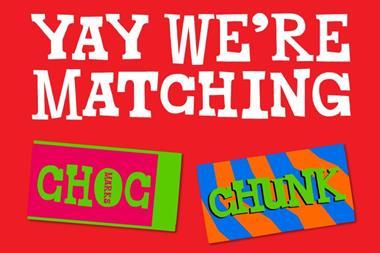
Later that same month, Tony’s criticised Morrisons and M&S for “duping” its chunky chocolate bars, without committing to its ethical sourcing credentials. It posted a graphic of its bar alongside M&S’s Choc Marks and Morrisons’ Chunk tablets with the caption: “We get it. We’re big fans too… We’ve always said we wanted to start a movement. But if you dupe our design, what about our sourcing model too?” Shots fired.
Sustainable packaging went mainstream
While Tony’s has doubled down on its sourcing credentials, M&S and Cadbury committed to improving their packaging.
M&S began wrapping its top-selling Vanilla Fudge flavoured chocolate bar in paper in February. It said the change would remove 1.4 million units of plastic from its Food Halls over the next 12 months, and if successful would be rolled out to more chocolate bars, eliminating another five million units.
Read more: Plastic to paper: the next phase of the packaging revolution
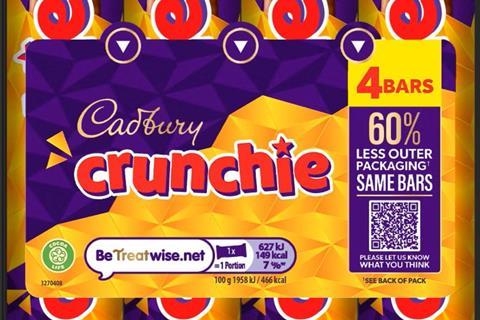
Meanwhile, Cadbury unveiled its first paper outer pack for Easter Favourites in January. This was followed by the trial of an “innovative” sticker for Crunchie multipacks sold in Tesco from August, in place of a plastic outer pack.
The chocolate giant finished the year with good intentions, trialling a paper tub for Heroes from October.
Luxe hot chocolate won shelf space in Tesco
Soaring cocoa costs have pushed up the price of hot chocolate and malted beverages. The sector’s £3.9m gain has been driven almost entirely by higher prices, with volume sales down 7%, according to NIQ data used in The Grocer’s Top Products 2025 Survey [52 w/e 6 September 2025].
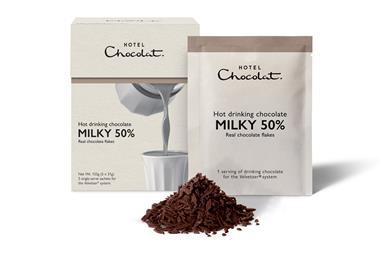
Despite declining volumes, Tesco appears to have identified an opportunity to flog premium lines. In October, it launched five flavours of Hotel Chocolat’s Velvetiser hot chocolate into Extra Stores, each priced at £7.95 for five portions. Hotel Chocolat founder and global CEO Angus Thirlwell pointed out that they would cater to the 1.5 million Velvetiser owners in the UK.
Read more: Hot beverages: coffee brands feel the heat as prices soar
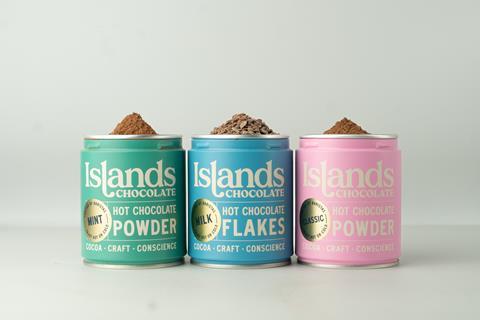
In the same month, Tesco listed a lesser known drinking chocolate brand, Islands Chocolate. Two 150g drinking chocolate tins – Classic Hot Chocolate Powder (rsp: £4.95) and Milk Hot Chocolate Flakes (rsp: £6.95) – rolled into the retailer, alongside a new box format, containing five single-serve sachets of Milk Hot Chocolate Flakes (rsp: £6.35).
“This launch with Tesco makes barista-quality hot chocolate available to everyone, every day – and we couldn’t be prouder,” said Islands Chocolate CEO Wilf Marriott.




No comments yet